What Are China Top 10 Clinical Furniture Suppliers?
Choosing the right clinical furniture supplier affects safety, workflow, cleaning, and long-term operating costs. This guide examines ten leading suppliers in China that serve hospitals, laboratories, clinics, and healthcare distributors. The selection considers product range, manufacturing experience, material quality, customization, export performance, and service support.
A dependable supplier should offer more than attractive catalog images. Buyers should examine stainless-steel grades, welded joints, drawer movement, caster quality, load ratings, and surface resistance. A treatment trolley should move quietly across a crowded corridor. A hospital bed should remain stable during adjustment. Cabinet interiors should also support fast cleaning and practical storage.
This overview draws on supplier information, product specifications, industry experience, and available compliance evidence. It also considers OEM capability, inspection procedures, packaging, delivery communication, and after-sales support. However, no ranking is permanently perfect. Factory conditions change, product lines evolve, and online claims may lack context. Careful verification remains essential.
The featured companies may suit different purchasing goals. One supplier may specialize in electric beds, while another focuses on examination tables, bedside cabinets, or laboratory workstations. Price alone cannot reveal total value. A lower quotation may involve weaker hardware or limited technical support. Comparing samples, drawings, warranties, and inspection records can expose those differences.
Readers can use this article as a practical starting point. The final decision should match facility needs, local requirements, budget, and expected service life. Small details matter. A handle that is easy to disinfect can improve daily efficiency. A reliable spare-parts policy can prevent avoidable disruption.

What Makes a Clinical Furniture Supplier Top-Ranked in China?
A top-ranked clinical furniture supplier in China is judged by more than product appearance. Hospitals need furniture that supports hygiene, safety, workflow, and long-term maintenance. Experienced suppliers understand how a nurse moves between a treatment trolley, storage unit, and patient bed. Small details matter. Smooth edges reduce cleaning difficulties. Sealed surfaces limit moisture entry. Quiet drawers help protect patient comfort.
Professional suppliers provide clear technical documents and practical evidence. They should explain material grades, load capacity, corrosion resistance, and cleaning compatibility. Factory audits, sample inspections, and traceable quality records build trust. Reliable manufacturers also understand relevant medical standards and export requirements. Still, certificates alone are not enough. A polished document cannot replace a well-tested product.
Strong suppliers offer flexible designs without weakening clinical performance. They may adjust cabinet dimensions, caster types, drawer layouts, or color systems for different departments. Their production teams should communicate clearly before manufacturing begins.
Delivery accuracy, spare parts, installation guidance, and responsive service also reveal real capability. Some suppliers promise too much during early discussions. That deserves caution. In my view, transparent limitations are more credible than perfect claims.
A supplier that admits a design weakness can often improve it faster. Consistent factory control, honest communication, and field-tested details make a supplier genuinely top-ranked.
Key Categories of Clinical Furniture for Hospitals and Healthcare Facilities
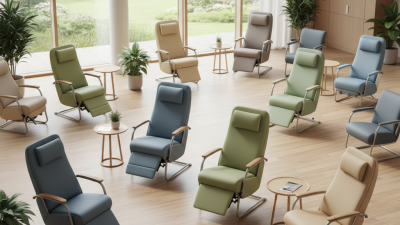
Clinical furniture suppliers serve more than one hospital need. Their product ranges usually cover examination tables, hospital beds, treatment couches, bedside cabinets, and procedure chairs. Each category supports a different clinical task.
Examination tables need height adjustment, stable steps, and surfaces that tolerate frequent disinfection. Hospital beds require dependable casters, side rails, brake systems, and flexible positioning. Treatment couches should support safe patient transfers, especially in physiotherapy and outpatient rooms. Procedure chairs often need adjustable backrests, arm supports, and easy-clean upholstery. Small details matter.
Storage furniture also shapes daily workflow. Bedside cabinets keep personal items within reach, while medical cupboards organize dressings, instruments, and protective equipment. Mobile carts reduce unnecessary walking between rooms. Stainless steel or sealed polymer surfaces can simplify cleaning, but material choice still depends on chemicals, humidity, and usage frequency.
A reliable supplier should provide load ratings, maintenance guidance, spare-part access, and documented quality controls. These details help procurement teams compare products beyond appearance. In practice, a beautiful cabinet may fail when its hinges loosen under heavy use. That is easy to overlook. Hospital designers should also check corridor width, turning space, infection-control routines, and staff ergonomics before ordering. A standard product may fit the catalogue but not the ward.
What Are China's Top 10 Clinical Furniture Suppliers?
Key Categories of Clinical Furniture for Hospitals and Healthcare Facilities
The chart presents the core clinical furniture categories commonly specified in hospital and healthcare facility projects. Patient beds, examination furniture, storage systems, seating, and medical trolleys support essential workflows across inpatient wards, outpatient clinics, operating rooms, emergency departments, and nursing areas.
China’s Top 10 Clinical Furniture Suppliers and Their Main Products
China’s top 10 clinical furniture suppliers are best evaluated by product depth, compliance records, and installation experience. Their main products include electric hospital beds, manual beds, bedside cabinets, overbed tables, examination couches, treatment carts, medicine trolleys, stainless-steel cabinets, waiting chairs, and nurse-station systems. Some suppliers also provide operating-room tables and modular clinical storage. The National Health Commission reported more than 1.07 million medical institutions and over 10 million hospital beds in China in 2023. This scale creates steady demand for durable, easily cleaned furniture.
The leading suppliers usually serve different segments rather than identical markets. Several focus on adjustable beds and patient transfer equipment. Others specialize in outpatient examination furniture, laboratory benches, or ward storage. A few combine design, metal fabrication, polyurethane molding, and on-site installation. Market research from Fortune Business Insights and Grand View Research identifies infection control, ergonomic adjustment, and smart-care integration as important hospital furniture trends. These findings support a practical selection method. Check load testing, corrosion resistance, mattress compatibility, spare-part supply, and documented quality systems. Ask for real hospital references.
Not every high-volume supplier offers the best clinical fit. This matters.
A low purchase price can hide weak wheels, noisy hydraulics, or difficult cleaning. Supplier rankings also change by product category and export market. That limitation deserves attention. A careful buyer should compare samples, inspection reports, warranty terms, and after-sales response before final approval.
How to Compare Quality, Certifications, Prices, and Customization Services
What Are China Top 10 Clinical Furniture Suppliers?
Comparing the top ten clinical furniture suppliers requires more than checking catalog photos. Examine steel thickness, weld quality, drawer movement, surface coating, and load capacity. A treatment cabinet should open smoothly after repeated use, not only during a showroom visit. Ask for test reports, production photos, inspection records, and material samples. Small details matter.
Certifications deserve careful checking. ISO 13485 can indicate controlled medical-device production, while ISO 9001 supports broader quality management. However, a certificate alone proves little. Confirm its scope, validity, issuing body, and connection to the actual factory. For export projects, check whether electrical parts, materials, and labeling meet the destination market’s requirements. Certification documents can be incomplete.
Price comparison should include freight, packaging, installation, spare parts, warranty terms, and replacement costs. A low quotation may hide thin panels or limited after-sales support. Customization also needs evidence. Request CAD drawings, color samples, prototype approval, and written tolerances. Discuss cable openings, antimicrobial surfaces, locking systems, caster sizes, and cleaning chemicals. Lead times should be separated into design, sampling, production, and inspection stages. I would not trust vague promises. Even experienced buyers sometimes overlook maintenance access, which later creates unnecessary service delays.
How to Choose the Right Chinese Clinical Furniture Supplier for Your Needs
Choosing a Chinese clinical furniture supplier requires more than comparing prices. The right partner should understand hospital workflows, cleaning routines, patient safety, and installation limits. Request factory videos, production records, material specifications, and recent project references. A useful reference should confirm delivery accuracy, product durability, and service response. Do not rely on polished catalogues alone.
Ask for a sample before approving a large order. Inspect welds, drawer movement, castors, edge finishing, and surface resistance. Place the cabinet beside a treatment bed to test clearance and access. Check whether common disinfectants affect color, coatings, or seals. Small details matter. A supplier with clinical experience will explain these risks clearly, not dismiss them. Require drawings, inspection checkpoints, packaging photos, testing reports, and a realistic production schedule.
Communication deserves a practical test. Send detailed questions and observe response speed, accuracy, and ownership. Ask who handles changes after payment and who supports installation problems. My own mistake was judging a supplier by fast replies; the first sample exposed weak drawer alignment. That lesson still matters. Reliable cooperation includes honest limitations, spare-part planning, and clear warranty terms. A lower quotation may become expensive when dimensions, packaging, or delivery assumptions remain vague. Choose the supplier whose process you can verify, not merely the one that promises more.