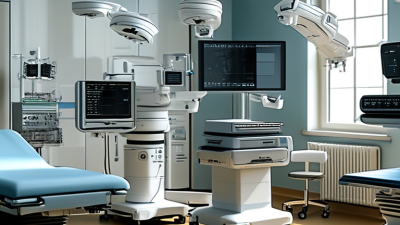
China’s health care solutions are drawing attention from global buyers seeking reliable equipment, digital tools, and manufacturing partners. The opportunity is broad, but procurement decisions should rest on evidence, not impressive catalogs. A hospital buyer may compare imaging systems, patient monitors, protective equipment, or software while checking service access and product documentation. Details matter. A delayed replacement part can disrupt a clinic more than a polished product brochure suggests.
Dr. Atul Gawande, surgeon and public health researcher, wrote, “Better is possible. It does not take genius. It takes diligence.” His observation offers a useful lens for evaluating health care solutions: improvement depends on careful systems, trained people, and consistent follow-through. Buyers can assess suppliers through transparent specifications, quality-management practices, user training, maintenance plans, and clear communication about product limitations. They should also confirm that products meet the requirements applicable in their own markets.
No supplier fits every setting. A large urban hospital and a rural clinic may need very different levels of connectivity, technical support, and replacement stock. Even a well-designed device can disappoint when staff lack time to learn it. That part is easy to overlook. This guide examines China’s health care solutions landscape through practical buyer considerations, including product categories, supplier evaluation, customization, and after-sales service. It also leaves room for a less comfortable question: what evidence is still missing before a purchase is justified?

China’s health care solutions industry spans clinical equipment, diagnostics, digital systems, hospital supplies, rehabilitation, and home-care services. Its scale is substantial: the National Health Commission’s 2023 Statistical Bulletin estimated national health expenditure at RMB 9.06 trillion, or about 7.2% of GDP. That figure reflects a broad care system, not just medical products. Buyers should distinguish between equipment, service delivery, and the software or maintenance needed to keep them working.
Core categories include imaging and monitoring devices, laboratory testing, hospital information systems, telehealth tools, and rehabilitation equipment. The same NHC bulletin recorded 38,355 hospitals in 2023, illustrating the size and diversity of potential care settings. A county hospital may prioritize dependable diagnostic equipment and service support; a home-care provider may need compact monitoring tools and clear user instructions. Needs vary.
For global buyers, evaluation should include clinical evidence, product documentation, interoperability, training, and after-sales support. The World Health Organization’s Global Strategy on Digital Health 2020–2025 stresses that digital tools depend on strong governance and integration, not technology alone. This point is easy to overlook. Categories also overlap: a remote-monitoring service can involve devices, software, clinical workflows, and data safeguards. Classification is useful, but it rarely tells the whole procurement story.
China offers global buyers a broad base of health care products, components, and manufacturing services. This range can make it easier to compare options for clinic equipment, diagnostic accessories, patient-care supplies, and custom components. Many suppliers support different order volumes and product specifications. That can help buyers match purchasing plans to local needs.
Cost is one benefit, but it should not be the only measure. Buyers may reduce expenses through competitive production, consolidated sourcing, and established freight routes. Clear specifications help prevent costly misunderstandings. For example, confirm dimensions, materials, packaging, labeling, and expected production timelines before approving a purchase. Small details matter.
Supplier access can also support product adaptation, such as changing packaging language or adjusting a non-clinical component. Ask for current quality documents, sample units, inspection records, and traceable production information. Verify certifications independently and check that each product meets the rules of its destination market. A sample may look excellent, while a later batch differs. That risk deserves attention. Written quality criteria and pre-shipment checks can reduce uncertainty, though they cannot remove it entirely. Buyers should also account for communication gaps, lead-time changes, and after-sales support before choosing a supplier.
| Sourcing Dimension | Potential Benefit for Global Buyers | What Buyers Should Verify |
|---|---|---|
| Broad product categories | China-based manufacturers supply a wide range of healthcare products, including medical devices, diagnostic equipment, hospital furniture, protective supplies, and rehabilitation products. This can help buyers compare options across several product categories. | Confirm the product’s intended use, technical specifications, applicable regulations, and whether the supplier is the actual manufacturer or a trading intermediary. |
| Manufacturing capacity | A large manufacturing base can provide options for different production volumes and product configurations. Capacity and lead times vary by product, factory, materials, and order size. | Review production capacity, current workload, sample quality, production records, and written delivery schedules. Consider an independent factory audit where appropriate. |
| OEM and product customization | Some suppliers offer original equipment manufacturing or customization, such as packaging, labeling, product dimensions, and selected technical features, subject to design and regulatory constraints. | Document specifications, approved samples, change-control procedures, intellectual property rights, labeling language, and responsibility for regulatory submissions. |
| Supplier ecosystem | Established industrial clusters and local supply networks can make it easier for some manufacturers to source components, materials, and production services within the same region. | Identify critical sub-suppliers and component origins. Assess supply continuity, traceability, counterfeit-prevention controls, and backup sourcing for essential inputs. |
| Cost and product choice | Buyers may find a broad range of price points and product configurations. Total cost depends on product quality, compliance requirements, order volume, shipping, duties, testing, and after-sales support. | Compare like-for-like specifications and calculate landed cost. Include inspection, freight, import duties, regulatory work, warranty terms, and service costs—not just the unit price. |
| Quality management | Qualified manufacturers may operate documented quality management systems and product-specific inspection processes. Certification can support supplier assessment but does not by itself prove that every product meets buyer requirements. | Check certificate scope, issuing body, validity, and facility details. Review risk management, batch records, complaint handling, corrective actions, and independent test results where relevant. |
| Regulatory compliance | China has a national medical-product regulatory system, including the National Medical Products Administration (NMPA). Products intended for export may also need to meet the rules of the destination market. | Determine the product’s regulatory classification and required approvals in each target market. Verify authorization directly with the relevant regulator; a certificate for one market does not automatically authorize sale in another. |
| Export and logistics options | Many export-oriented suppliers are familiar with international shipping documentation and can work with freight forwarders. Available shipping methods, transit times, and costs depend on the route and current logistics conditions. | Agree on Incoterms, packaging requirements, shipment documents, delivery milestones, insurance, and responsibility for customs clearance. Confirm any special handling requirements for the product. |
| After-sales support | Some suppliers provide spare parts, technical documentation, training, or remote troubleshooting. The level of support varies by product and supplier. | Set service response times, warranty coverage, spare-parts availability, training arrangements, software-update responsibilities, and procedures for safety complaints or product recalls. |
| Risk management | A structured sourcing process can help buyers manage quality, regulatory, delivery, and communication risks when purchasing internationally. | Use a written quality agreement, pre-shipment inspections where appropriate, traceability requirements, clear acceptance criteria, and a contingency plan for delays or nonconforming products. |
Leading Chinese health care products for global buyers include diagnostic consumables, patient monitors, rehabilitation equipment, and imaging systems.
WHO’s Global Atlas of Medical Devices (2017) describes roughly 2 million medical device types worldwide, grouped into more than 7,000 generic categories. That variety makes sourcing a technical decision, not just a price comparison.
Check intended use, device interfaces, power requirements, and local service access.
For a bedside monitor, ask for clear specifications, sample test records, and details on replacement parts. For disposable products, review material information, packaging integrity, and batch traceability.
Confirm which registrations or certifications apply in the destination market. A polished catalog can still leave unanswered questions; buyers can overlook this when comparing quotes.
No shortcut here. Careful evaluation takes time.
Tips:
Request a current technical file and a sample before placing a large order. Compare the sample with the written specifications, then confirm warranty terms, training, and after-sales support. Keep a record of unresolved issues, too. That list may feel fussy, but it can reveal gaps before equipment reaches a clinic.
For global buyers, evaluating Chinese health care suppliers starts with evidence, not a polished catalog. Ask for current quality-system certificates and check that their scope covers the product and manufacturing site you are considering. Confirm certificate details with the issuing organization when possible. A document alone does not prove consistent production.
Review product specifications, test reports, and batch traceability records. Compare a sample against the written requirements: dimensions, materials, labeling, packaging, and instructions should match. For equipment, assess setup, cleaning, and routine maintenance. For consumable products, inspect seals and lot information. Small details matter.
Check whether test methods and results fit your intended market and use. Requirements vary, so consult qualified regulatory professionals before making decisions. Ask how the supplier handles defects, changes to materials, and customer complaints. Request realistic lead times and written service terms. Clear answers help.
Speak with the people who manage quality, not only the sales contact. If possible, arrange a site assessment or an independent inspection before shipment. Keep records of approvals and sample evaluations. A polished catalog can still leave gaps. No checklist catches everything. Some buyers move too quickly after a successful sample; production lots may differ, so ongoing checks remain useful.
Suggested buyer evaluation weights for a structured supplier review. These are framework recommendations—not survey results or ratings of actual suppliers.
Review current NMPA registration or filing status where applicable, quality-system documentation, product-specific clinical evidence, traceability records, and post-market procedures. Requirements vary by product classification and destination market.
Global healthcare procurement depends on more than price and product specifications. Buyers should confirm destination-market registration, importer responsibilities, labeling rules, and required quality documents before placing an order. Requirements differ by product and jurisdiction, so verify them with the relevant regulator or a qualified local compliance professional. The World Health Organization estimated that 1 in 10 medical products in low- and middle-income countries is substandard or falsified, based on a 2017 review of available studies. That figure is a warning, not a prediction for any specific shipment. Request traceable batch records, certificates, and inspection evidence, then check that they match the goods received.
Delivery planning needs the same care. Agree on Incoterms, customs paperwork, product classification, and who handles duties before dispatch. For temperature-sensitive products, specify validated packaging, calibrated data loggers, and a clear response plan for delays. A logger is useful. Only if someone reviews it. Keep shipment records, temperature data, and supplier communications together; they help teams investigate excursions and improve later orders. Even a complete document pack can miss a local label detail, so check samples early.
Tips: Ask suppliers for a document checklist before purchase. Confirm shelf life at arrival, not just at dispatch. Test the route with a small shipment when feasible, and record what went wrong.