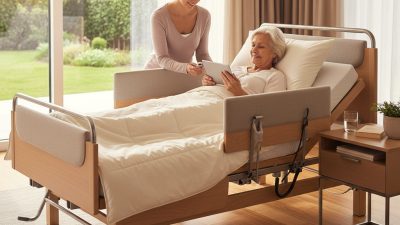
Choosing the right medical beds from China requires more than comparing prices on a supplier website. A bed must support safe transfers, comfortable positioning, reliable cleaning, and continuous clinical use. One weak caster can delay a patient transfer. One poorly sealed control panel can complicate infection-control work.
The global hospital beds market was valued at approximately USD 3.91 billion in 2023, according to Fortune Business Insights. Its report also projects continued growth through 2032, driven by aging populations, hospital expansion, and demand for adjustable care equipment. Grand View Research identifies electric adjustment, pressure-relief functions, and connected monitoring as important product trends. These figures describe market direction, not automatic product quality.
The World Health Organization emphasizes that safe healthcare depends on suitable equipment, trained users, and dependable systems. Don Berwick, former president of the Institute for Healthcare Improvement, stated, “The goal of the healthcare system must be to improve the health of populations.” That principle belongs in every medical beds purchasing decision.
China offers broad manufacturing capacity, customization options, and competitive costs. However, product samples can hide inconsistent welding, unclear load ratings, or weak after-sales support. Buyers should verify factory experience, risk-management procedures, electrical safety documentation, warranty terms, spare-parts availability, and testing records. Ask for evidence.
A credible supplier should explain how each model performs in real wards, not only in promotional photographs. Certification alone is not enough. It must match the destination market and the intended clinical use.
This guide examines those practical details. It also acknowledges an uncomfortable truth: the cheapest medical beds may become the most expensive choice when failures disrupt care.
The use case matters. Manual beds suit basic ward care where staff can adjust positions safely. Electric beds support patients needing frequent changes, including backrest, leg, and height adjustments. ICU beds provide advanced positioning, weighing systems, side rails, and emergency access. Homecare beds usually focus on quieter movement, easier cleaning, and simple controls. Bariatric beds require wider frames and higher safe working loads. Choosing by appearance alone is risky.
When sourcing from China, match the bed type with the patient’s condition and care environment. Check the mattress platform size, maximum load, castor design, rail structure, motor performance, and emergency functions. Request test reports, user manuals, material details, and inspection records. Reliable suppliers should explain intended use clearly, not only quote a low price. Local electrical and medical-device requirements also need verification before purchase. Even experienced buyers can overlook room width or doorway clearance.
Tips: Measure the room first. Ask for evidence. Confirm spare parts and warranty terms. Test a sample bed when possible, especially its brakes, rails, remote control, and lowest height. A cheaper model may become expensive after repeated repairs. Specifications can also be misunderstood, so define every measurement in writing. The “best” bed is not always the most advanced one; it is the safest match for the patient, caregivers, and daily workflow.
Assessing Patient, Caregiver, and Facility Requirements Choosing a medical bed should begin with the patient, not the catalog. Consider mobility, body weight, fall risk, pressure injury risk, and cognitive condition. A patient with limited strength may need simple electric controls and clear hand controls. Someone at high fall risk may require adjustable height and secure side protection. Mattress compatibility also matters. A poor mattress choice can reduce the bed’s clinical value.
Caregivers need safe, efficient access. Check whether the bed reaches a comfortable working height for repositioning, washing, and transfers. Examine control placement, wheel brakes, emergency lowering, and the effort needed to move the bed. Small details matter. In busy rooms, awkward cables or difficult-to-clean joints can create daily problems. Ask for user instructions, maintenance schedules, load testing records, and spare-part availability before purchasing from China.
The facility adds another layer. Measure doorways, lifts, storage areas, and power points. Confirm that the bed fits existing mattresses, transfer equipment, and cleaning procedures. Request product specifications, inspection reports, and sample testing before a larger order. A checklist helps, but it cannot reveal every practical weakness. Staff should test the bed with gloves, a mattress, and a real transfer routine. Requirements may change after installation, so reassessment is necessary.
How to Choose the Best Medical Beds from China?
A suitable medical bed begins with patient safety, not price. Check height adjustment, backrest movement, knee elevation, and safe working load. These functions should operate smoothly, without sudden drops or excessive noise. Lockable castors must hold the bed firmly on uneven hospital floors. That detail is easy to overlook.
Materials affect hygiene and durability. Powder-coated steel offers structural strength when properly treated against corrosion. ABS panels are lighter and easier to clean. Stainless steel may suit areas requiring frequent disinfection. Inspect joints, welds, mattress platforms, and cable routing closely. Sharp edges or exposed wires indicate poor quality control. The bed should also support cleaning chemicals used by your facility.
Safety documentation needs careful review. Ask for reports linked to applicable standards, such as IEC 60601-1 and IEC 60601-2-52. ISO 13485 certification can show a controlled medical-device quality system. However, certification alone is not proof of every model’s performance. Request model-specific test results, risk assessments, user manuals, and load testing records. Confirm compliance requirements in the destination country. They may differ from Chinese requirements. Side rails should reduce entrapment risks, while emergency lowering and battery backup should work during power loss. Test these features in person when possible. A checklist helps, but it cannot replace hands-on inspection. I would not assume a polished catalog reflects dependable bedside performance. That assumption deserves questioning.
| Evaluation Category | Key Feature or Dimension | Recommended Requirement | Preferred Materials and Construction | What to Verify Before Purchase |
|---|---|---|---|---|
| Safety Standard | Medical electrical bed safety | The bed should be designed and tested according to IEC 60601-2-52, the particular standard for medical beds, together with applicable general requirements of IEC 60601-1. | Electrical actuators, control boxes, hand controls, and wiring should be protected against mechanical damage, liquid ingress, and unintended operation. | Request a current test report or certificate identifying the exact model, configuration, test laboratory, standard edition, and scope of testing. A general factory statement is not equivalent to a product-specific report. |
| Patient Safety | Side rails and entrapment prevention | Side rails should lock securely in both raised and lowered positions and be evaluated for head, neck, chest, and limb entrapment risks under the applicable medical-bed standard. | Use rounded, smooth rail components made from coated steel, aluminum, or impact-resistant engineering plastic. Avoid sharp edges, exposed fasteners, and excessive movement. | Check the rail locking force, release mechanism, pinch points, gaps, and compatibility with the intended mattress. Ask for entrapment-risk test documentation rather than relying only on visual inspection. |
| Load Capacity | Safe working load | The supplier should clearly state the safe working load and explain whether it includes the patient, mattress, side rails, IV poles, lifting equipment, and other accessories. | Use a reinforced steel frame with welded or mechanically secured joints. Casters, actuator mounts, and lift mechanisms should be rated for the complete loaded configuration. | Compare the declared safe working load with the maximum intended patient weight and accessory load. Confirm the test method, overload margin, and whether the rating applies to all bed positions. |
| Adjustability | Backrest, knee-rest, height, and Trendelenburg functions | A general hospital bed commonly provides independent backrest and leg-section adjustment, variable bed height, and, where clinically required, Trendelenburg and reverse Trendelenburg positioning. | Prefer synchronized electric actuators with mechanical stops, protected moving parts, and a stable four-section or equivalent platform. | Check actual adjustment angles, height range, speed, noise, emergency lowering, anti-crush protection, and whether the mattress platform remains stable at the highest and lowest positions. |
| Emergency Use | CPR release and emergency positioning | A rapid mechanical CPR release should return the backrest to a substantially flat position without depending solely on mains power. | Use a clearly identified release lever with a robust linkage and controlled descent. The mechanism should be accessible from the intended caregiver position. | Test CPR release repeatedly with the specified mattress and load. Confirm that the release does not create a sudden drop, pinch hazard, or loss of patient support. |
| Mobility | Casters, brakes, and steering | All casters should roll smoothly, while the central or individual braking system should prevent unintended movement on the intended floor surface. | Heavy-duty medical casters with sealed bearings, non-marking polyurethane or similar wheels, and corrosion-resistant hardware are suitable for routine hospital use. | Verify caster diameter, swivel behavior, total-lock and directional-lock functions, braking performance, turning radius, and compatibility with thresholds and ramps. |
| Frame Material | Strength, corrosion resistance, and cleanability | The frame should withstand repeated adjustment, patient transfer, cleaning, and transport without excessive deflection, cracking, or coating failure. | Powder-coated carbon steel is common for the main frame. Stainless steel may be preferred in areas requiring higher corrosion resistance. Surfaces should be smooth and free of dirt-trapping recesses. | Request coating specifications, corrosion-resistance test information where relevant, weld-quality controls, and confirmation that the finish is compatible with the facility’s disinfectants. |
| Patient Contact Parts | Mattress platform, boards, and touch surfaces | Patient-contact and frequently handled components should be non-porous, easy to disinfect, and resistant to cracking or delamination. | ABS or polypropylene bed boards are commonly used for impact resistance and cleaning. High-pressure laminate or coated metal may be used for the mattress platform, depending on the design. | Check chemical compatibility with hospital disinfectants, allowable cleaning temperature, UV or sunlight resistance, replacement-part availability, and whether components can be removed without special tools. |
| Electrical System | Power supply, battery backup, and controls | The bed should use the voltage and frequency required in the destination market and include protection against unintended movement. A battery backup is valuable for transport and power outages. | Use protected low-voltage actuators, flame-retardant cable management, sealed connectors where appropriate, and a hand control with tactile or clearly marked functions. | Verify input voltage, plug type, battery chemistry, charging time, expected battery cycles, backup duration, ingress protection, fuse protection, and availability of replacement batteries. |
| Infection Control | Cleaning and disinfection design | The bed should tolerate the hospital’s validated cleaning and disinfection procedures without corrosion, swelling, discoloration, or loss of function. | Prefer sealed actuator housings, removable mattress platforms, rounded corners, welded seams, and minimal exposed tubing or cable loops. | Obtain a chemical-resistance list for the actual materials and coatings. Test representative disinfectants on a sample when possible, especially chlorine-based, alcohol-based, or peroxide-based products. |
| Mattress Compatibility | Dimensions, profile, and pressure-care compatibility | The mattress must fit the platform without unsafe gaps and must remain compatible with the bed’s articulation, side rails, and intended patient-care functions. | Use a medical-grade foam or powered pressure-redistribution mattress with a fluid-resistant, removable, welded-seam cover where clinically appropriate. | Confirm mattress length, width, thickness, maximum patient weight, fire-performance requirements in the destination market, cover cleaning instructions, and side-rail height after the mattress is installed. |
| Risk Management | Hazard identification and residual-risk control | The manufacturer should maintain a documented risk-management process consistent with ISO 14971, covering entrapment, falls, unintended movement, electrical hazards, transfer, cleaning, and foreseeable misuse. | Safety-critical parts should have controlled specifications, traceability, and documented inspection or functional testing. | Request the risk-management summary, critical-component list, inspection records, complaint-handling process, and corrective-action procedure. Confirm that the documentation applies to the exact model supplied. |
| Quality Management | Manufacturing controls and traceability | A medical-device quality-management system aligned with ISO 13485 is a strong indicator of controlled design, production, inspection, and post-market processes. | Critical components should have incoming inspection, batch or serial traceability, defined assembly procedures, and final functional testing. | Verify the certificate issuer, certificate scope, validity, manufacturing site, model coverage, and whether the certificate covers medical devices rather than only general manufacturing activities. |
| Testing and Delivery | Factory acceptance and pre-shipment inspection | Every production batch should undergo functional checks for lifting, backrest movement, leg movement, braking, side-rail locking, CPR release, controls, and electrical safety. | Use documented inspection fixtures and calibrated test equipment. Packaging should protect actuators, control panels, casters, and painted surfaces during export transport. | Define inspection criteria in the purchase contract, including sample size, acceptance limits, required photographs or videos, spare parts, packaging tests, and procedures for handling nonconforming units. |
| Regulatory Fit | Destination-market compliance | Compliance requirements depend on the importing country. The product may require technical documentation, labeling, electrical approvals, registration, or conformity assessment before use. | Labels should include model identification, electrical ratings, safe working load, warnings, manufacturer information, and applicable symbols in the required language. | Confirm the importer’s obligations and the applicable rules before ordering. Do not treat CE, FDA registration, or another market-specific claim as universal approval for every country or every bed configuration. |
| Serviceability | Spare parts, warranty, and technical support | A suitable supplier should provide a defined warranty, maintenance instructions, spare-parts list, wiring diagrams where appropriate, and a clear response process for safety-related issues. | Prefer modular actuators, replaceable casters, accessible fuses, standardized fasteners, and components that can be serviced without damaging the frame or electrical harness. | Ask for the expected service life, actuator and battery replacement intervals, spare-parts lead times, technician training, remote troubleshooting support, and end-of-life disposal guidance. |
Procurement note: The requirements above are practical evaluation criteria, not a substitute for the regulations applicable in the destination market. Final acceptance should be based on the exact bed configuration, current product-specific test documentation, clinical use case, and local medical-device requirements.
Choosing medical beds from China requires more than comparing prices or polished factory photographs. Compare the manufacturer’s quality system, product scope, and traceable testing records. The ISO Survey 2023 identifies China as the world’s largest base of ISO 9001-certified organizations, but certification alone does not prove reliable bed performance. Ask whether ISO 13485 covers the specific medical-bed facility, not only another product line. Request recent audit findings, corrective-action records, and batch traceability.
For electrical beds, verify testing against IEC 60601-1 and IEC 60601-2-52, including leakage current, load stability, side-rail strength, and emergency backrest movement. The IEC 60601-2-52 standard addresses safety requirements for medical beds used in healthcare environments. Check whether an independent laboratory performed those tests. A supplier should also provide risk-management evidence aligned with ISO 14971. Good factories can show serial-number tracking, incoming steel inspection, weld sampling, and a documented final test before packing.
The WHO Global Model Regulatory Framework for Medical Devices stresses effective controls across the product lifecycle, not just pre-market approval. That point is often missed. I would inspect a sample bed personally, measuring noise, caster locking, and mattress-platform gaps. Small details matter. One weakness remains: some suppliers present valid certificates with narrow scopes or expired annexes. Verify certificate numbers directly with the issuing body, review local registration requirements, and place a pilot order before committing to volume. The cheapest quotation may hide weak service records, replacement-part delays, or inconsistent assembly.
Reference years of major standards and regulatory frameworks used when evaluating medical-bed safety, quality management, and market access.
The chart compares the publication year of widely referenced frameworks. For Chinese medical beds, buyers should verify applicable Chinese standards, electrical and mechanical safety test reports, an ISO 13485 quality-management certificate, risk-management records, traceability, and market-specific conformity documentation. A newer publication year does not by itself indicate superior product quality.
References: GB 9706.1-2020, Medical electrical equipment—Part 1; IEC 60601-2-52:2009, Particular requirements for the basic safety and essential performance of medical beds; ISO 13485:2016, Medical devices—Quality management systems; Regulation (EU) 2017/745 on medical devices.
Choosing medical beds from China requires more than comparing the first quotation. Price should include motors, mattresses, side rails, spare parts, packaging, inspection, and shipping. A low unit price may hide expensive replacements later. Ask for a clear quotation with payment terms, production time, warranty length, and delivery conditions. Request product photos, test records, and relevant quality certificates, such as ISO 13485 or IEC 60601 documentation where applicable.
Customization can improve care and workflow. Confirm the bed’s dimensions, height range, load capacity, control panel language, caster type, and emergency functions. Send a detailed specification sheet, not only a reference image. Small differences matter. A five-centimeter height change can affect patient transfers and caregiver safety.
Logistics also deserves close attention. Check export packaging, container loading plans, customs documents, and damage procedures. A pre-shipment inspection can reveal loose cables, cracked panels, or missing accessories. I have learned that visual approval is never enough; real testing remains essential.
Tips: Compare total landed cost, not factory price. Ask for spare parts and repair videos. Set a written response time for technical support. Confirm who pays for warranty shipping. Keep one sample for evaluation before ordering in volume. After-sales support should include manuals, training, troubleshooting guidance, and accessible replacement parts. A supplier may promise fast service, but vague promises are difficult to measure. Use written service standards and review them before production begins.