TISCOMED

7 Best Medical Hospital Beds for Global Buyers

Choosing the right medical hospital beds is a clinical, operational, and purchasing decision. Global buyers must look beyond price, photographs, and impressive feature lists. A bed should support safe patient positioning, efficient nursing care, easy cleaning, and dependable daily use. In a busy ward, small details matter. Smooth casters, strong side rails, clear controls, and a quiet electric motor can reduce pressure on staff and patients.

This guide reviews seven hospital bed options for different care settings, including general wards, long-term care, emergency units, and home-care programs. Each choice should be examined through practical evidence, such as load capacity, mattress compatibility, adjustment range, battery performance, and maintenance access. Suppliers should also provide technical documentation, warranty terms, user training, and responsive after-sales support. Local electrical requirements and healthcare regulations must be checked before purchasing.

No single bed fits every facility. A model that works well in a private clinic may disappoint in a crowded public hospital. That difference is easy to underestimate. Product descriptions may also hide limitations, especially around spare parts or service coverage. Careful buyers should ask direct questions, compare total ownership costs, and request demonstrations when possible. Feedback from nurses, biomedical engineers, and infection-control teams can reveal problems that brochures rarely mention. The following selection focuses on dependable design, practical usability, and purchasing confidence, while recognizing that some recommendations may require further review for specific regions and patient populations.

7 Best Medical Hospital Beds for Global Buyers

What Medical Hospital Beds Are and Who Needs Them

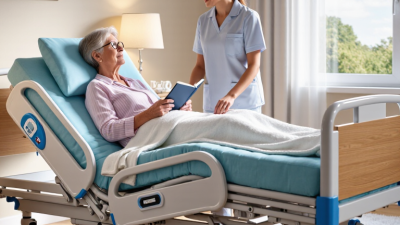
Medical hospital beds are specialized platforms designed to support safe treatment, repositioning, and recovery. Unlike ordinary beds, they often include adjustable backrests, leg sections, side rails, locking casters, and height controls. These features help clinicians examine patients without excessive bending. They also make transfers safer for patients with limited strength.

A reliable bed should provide stable movement and simple controls. Electric models allow precise positioning, while manual versions may suit facilities with limited power access. Some beds include emergency lowering, battery backup, weighing systems, or pressure-relieving mattress compatibility. Buyers should check load capacity, mattress dimensions, cleaning requirements, and spare-part availability. Local medical-device regulations also matter, because approval rules differ between countries.

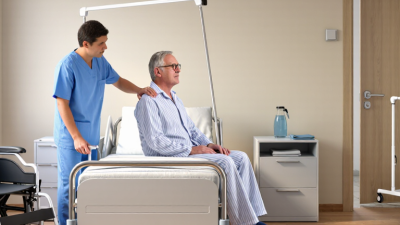
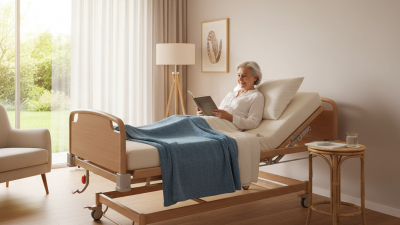
These beds are commonly needed in hospitals, surgical wards, rehabilitation centers, nursing homes, and home-care settings. Patients recovering from surgery may need raised backs and elevated legs. Older adults with balance problems may benefit from low-height settings and secure rails. People with severe mobility limitations may require stronger frames and assisted repositioning. However, side rails are not automatically safe for everyone. Incorrect use can increase injury risks, so trained caregivers should assess each patient.

From practical use, small details often become important. A quiet motor can protect sleep during nighttime care. Smooth casters help staff move a bed across narrow corridors. Yet no bed fits every patient or facility. Buyers sometimes focus on features and overlook staff training, room space, and maintenance support. That decision deserves reconsideration.

Key Features for Comparing Hospital Beds Worldwide

Choosing among the seven best medical hospital beds requires more than comparing prices. Global buyers should assess safety, adjustability, cleaning, and local service support. The WHO Global Patient Safety Report 2024 states that one in ten patients experiences harm during healthcare delivery. More than half of these incidents are considered preventable. Bed design therefore deserves clinical attention.

A strong comparison begins with the frame and mattress platform. Check safe working load, height range, backrest angle, knee elevation, and emergency positioning. IEC 60601-2-52 provides international requirements for electrically operated medical beds. Confirm that controls are intuitive, lockable, and suitable for the available power supply.

Small details matter. Look for sealed panels, smooth corners, removable components, and accessible castors. These features reduce cleaning time and movement risks.

Connectivity may help larger hospitals, but it is not automatically better. OECD Health Statistics 2024 shows wide differences in hospital-bed capacity and healthcare resources across countries. A sophisticated bed may become difficult to maintain where spare parts or trained technicians are limited. Ask about warranty response, user training, replacement batteries, and documentation in the local language. My practical concern is often overlooked: buyers may compare seven models in a showroom, then discover poor performance on uneven floors. Test the bed with real mattresses, patient weights, and cleaning routines before ordering. That extra step can expose weaknesses early.

Seven Leading Medical Hospital Bed Options for Global Buyers

Global buyers need hospital beds that match clinical work, infrastructure, and patient safety goals. The WHO reports that 1 in 10 patients experiences harm during healthcare, and about half is preventable. Bed selection deserves careful attention.

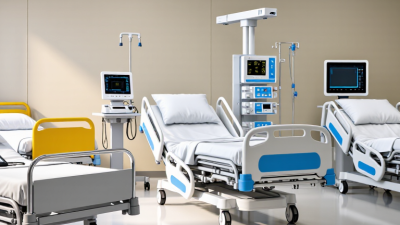
Seven leading options cover different care settings. A manual two-crank bed suits basic wards with limited power access. A three-crank model adds smoother back and leg positioning. An electric multi-function bed supports frequent adjustments and reduces caregiver strain. A low bed helps reduce injury risk during falls. An intensive-care bed provides integrated scales, emergency positioning, and accessory rails. A bariatric bed requires reinforced frames and wider sleeping surfaces. A pediatric bed needs secure enclosure panels and controlled access.

Look closely at load ratings, mattress-platform dimensions, castor brakes, rail gaps, and cleaning surfaces. ISO 60601-2-52 addresses safety requirements for medical beds, while IEC 60601-1 supports broader electrical safety evaluation. The WHO Global Patient Safety Action Plan 2021–2030 also emphasizes risk reduction through safer systems, not isolated products. Ask for test records, service schedules, replacement-part availability, and user training. A low price can still become expensive when parts are unavailable. No checklist is perfect. Local nurses may reveal practical problems that laboratory testing misses. Review transfer height beside the actual trolley, not only in a catalog. Regional voltage, humidity, doorway width, and staffing patterns should influence the final choice.

How to Match Each Bed With Patient and Care Requirements

7 Best Medical Hospital Beds for Global Buyers

How to Match Each Bed With Patient and Care Requirements

Bed selection should begin with the patient, not the catalogue. A manual two-crank bed suits stable patients and facilities with limited power access. A three-function electric bed improves positioning, transfers, and routine nursing care. For intensive monitoring, a five-function ICU bed offers stronger rails, weighing systems, emergency positioning, and integrated accessories. A low-height bed can reduce injury risk for confused or fall-prone patients. It is not suitable for every ward.

Bariatric beds need wider frames, reinforced decks, and verified safe working loads. Pediatric beds require smaller dimensions, secure locking systems, and gap protection. Traction-compatible beds support orthopedic treatment, but only when prescribed and correctly configured. The World Health Organization’s Global Patient Safety Report 2024 states that around one in ten patients experiences harm in healthcare, with more than half considered preventable. Bed stability, alarm visibility, and easy cleaning therefore deserve equal attention.

Pressure management also matters. The Agency for Healthcare Research and Quality reports that about 2.5 million hospitalized patients in the United States develop pressure ulcers annually. Choose a compatible mattress, adjustable height, and breathable surfaces for patients with limited mobility. Check IEC 60601-2-52 alignment, local electrical rules, spare-part access, and staff training before purchase. I would not trust a high-tech bed without a practical maintenance plan. A simple bed can perform better when caregivers understand it.

7 Best Medical Hospital Beds for Global Buyers - How to Match Each Bed With Patient and Care Requirements

Dimensions and safe working loads are typical ranges for internationally available hospital-bed configurations. Always verify the final technical specification, electrical requirements, mattress compatibility, and applicable local regulations before purchase.
Bed Type Recommended Patient and Care Requirement Typical Mattress-Platform Size Typical Safe Working Load Key Functions Main Advantages Important Limitations and Buying Checks
1. Manual Two-Crank Hospital Bed
Basic adjustable bed
Stable patients in general wards, home care, rehabilitation, or facilities with limited access to electricity. Suitable when caregivers can operate mechanical cranks safely. Approximately 900–1,000 mm wide × 2,000–2,200 mm long Approximately 170–250 kg, including the patient, mattress, bedding, and accessories Manual backrest adjustment; manual knee or leg adjustment; optional height-fixed or manually adjustable frame; lockable castors on many configurations Low purchase cost, simple maintenance, and continued operation during power interruptions Requires caregiver effort and may be unsuitable for frequent repositioning, dependent patients, or high-acuity care. Check crank access, pinch-point protection, brake design, and replacement-part availability.
2. Semi-Electric Hospital Bed
Electric backrest with manual height or leg adjustment
Medical wards, nursing homes, and home-care patients who need regular upper-body positioning but do not require frequent powered height adjustment. Approximately 900–1,000 mm wide × 2,000–2,200 mm long Approximately 180–250 kg, including the patient and equipment Powered backrest; manual knee adjustment; often includes a hand control, IV-pole sockets, side rails, and emergency manual backrest release Improves patient comfort and reduces manual lifting during backrest positioning while keeping the system relatively economical Manual height adjustment can increase caregiver strain. Confirm voltage, plug type, ingress protection, battery-backup options, hand-control layout, and compatibility with the local power supply.
3. Full-Electric Five-Function Hospital Bed
General electric ward bed
Patients requiring frequent position changes, assisted transfers, fall-risk management, or easier access for nurses and caregivers in hospitals and long-term-care facilities. Approximately 900–1,000 mm wide × 2,000–2,200 mm long Approximately 200–250 kg, including patient, mattress, and accessories Powered height adjustment, backrest, knee section, and Trendelenburg or reverse Trendelenburg on applicable models; central or individual castor brakes Reduces caregiver bending, supports safer transfers, and allows more precise positioning for daily care Higher cost and greater dependence on electrical and control-system reliability. Check battery operation, emergency lowering, motor duty cycle, cleaning resistance, rail height, and service support.
4. Intensive Care Unit Bed
Critical-care and high-acuity bed
Critically ill, ventilated, hemodynamically unstable, or highly dependent patients who require frequent repositioning, monitoring, procedures, and rapid emergency access. Approximately 900–1,050 mm wide × 2,000–2,300 mm long Approximately 220–300 kg, depending on the frame and configuration Electric profiling and height adjustment; CPR release; radiolucent back section on many models; integrated scale option; removable head and foot boards; advanced accessory supports Supports rapid clinical intervention, patient handling, equipment organization, and high-frequency cleaning Requires trained staff, preventive maintenance, suitable ICU space, and compatible monitoring or imaging equipment. Verify CPR performance, radiolucency, electrical safety, mattress system, and infection-control requirements.
5. Bariatric Hospital Bed
Reinforced wide-frame bed
Larger-bodied patients whose weight, width, turning space, or transfer needs exceed the safe limits of a standard hospital bed. Approximately 1,000–1,220 mm wide × 2,000–2,200 mm long; wider configurations may be available Approximately 300–450 kg, including the patient, mattress, bedding, and accessories Reinforced deck and frame; powered profiling on many models; wide mattress platform; heavy-duty castors; optional lateral expansion or integrated weighing system Provides better patient dignity, stability, caregiver access, and load capacity when correctly sized Needs more room, stronger transfer equipment, and a correctly matched bariatric mattress. Confirm door, lift, elevator, and bathroom clearances; never rely on nominal patient weight alone when calculating safe working load.
6. Low-Height Fall-Prevention Bed
Low bed for fall-risk patients
Patients at increased risk of falling from bed, including older adults, people with reduced mobility, and patients who need easier access to the floor during unsupervised movement. Approximately 900–1,000 mm wide × 2,000–2,200 mm long Approximately 180–250 kg, depending on the frame and accessories Very low mattress-platform height, often with powered height adjustment; adjustable side rails or assist handles; optional floor-level position Can reduce the distance of a potential fall and may support safer independent entry and exit when clinically appropriate A low bed does not eliminate fall risk and may complicate transfers for some patients. Assess the need for a fall mat, alarm, supervision, assist rails, and a compatible low-profile mattress.
7. Pediatric Hospital Bed
Enclosed pediatric care bed
Infants, children, or small adolescents who need a safe enclosed space, pediatric-sized mattress support, and protection against climbing or accidental exit. Approximately 700–900 mm wide × 1,400–1,900 mm long, selected according to the child’s size and clinical age range Approximately 80–180 kg, depending on the pediatric bed category High transparent or mesh enclosure; child-resistant access panels; adjustable backrest on some models; lockable castors; accessory poles or monitoring supports Helps maintain a controlled care environment and supports observation while reducing accidental exit from the bed Must match the child’s height, weight, developmental stage, and behavior. Check enclosure openings, entrapment prevention, access-panel locks, mattress fit, cleaning procedures, and pediatric safety standards.
Global Buyer Selection Checklist: Match the bed to patient weight and mobility, required positioning, fall risk, mattress type, room dimensions, door and elevator clearances, caregiver workflow, cleaning protocol, local electrical supply, spare-parts availability, staff training, and applicable medical-device regulations.

International Standards, Costs, Shipping, and After-Sales Support

7 Best Medical Hospital Beds for Global Buyers

For international buyers, the best seven bed types include manual two-crank, three-crank, electric, low, bariatric, intensive-care, and pediatric models. Each choice should match patient weight, ward layout, power reliability, and caregiver workload. IEC 60601-2-52 covers safety requirements for medical beds, while ISO 13485 supports controlled manufacturing systems. A certificate alone is not enough. Request test reports, load ratings, emergency-backrest performance, and electrical compatibility before ordering.

Costs extend beyond the factory quotation. Calculate the landed price: bed, mattress platform, accessories, packaging, insurance, freight, customs, installation, and local taxes. UNCTAD reports that maritime shipping carries over 80% of global merchandise trade, but port congestion and route changes can sharply affect delivery schedules. Knock-down packaging may reduce container volume. However, it can increase assembly errors. A cheaper bed is not always cheaper in service.

After-sales support deserves equal attention. WHO has reported that up to 80% of medical equipment in some low-resource settings remains unused because of maintenance and training problems. Ask for spare-part availability, repair procedures, warranty limits, and video training. A practical agreement should define response times and replacement responsibility. Keep common parts locally when possible. I would not trust a perfect sales spreadsheet; real hospital conditions are messier, and power cuts, rough floors, or missing technicians can expose weaknesses quickly.